eo_logo
 
Product added to cart

Edmund Optics®

Knowledge Center

 Verified library of trusted technical resources created by our 240+ global engineers.

Filter
Search Results for: Other Cameras (30)

How Do Cameras Work?

Optical Engineer Kevin Quist explains how cameras work, describing sensors, lenses, and pixels in a kid-friendly way

View Now Add to saved content

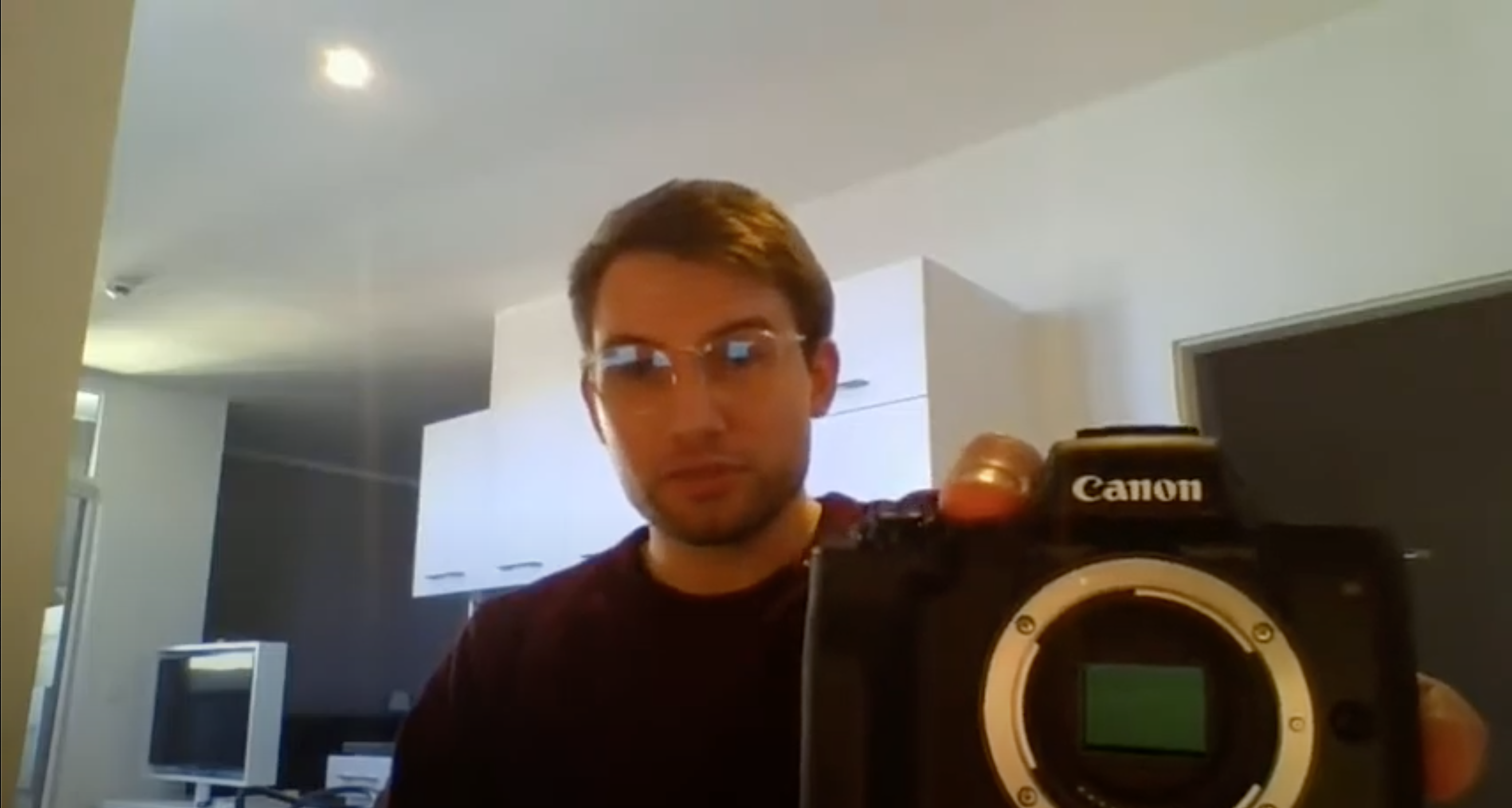
Byte Sized: The Case of Color vs. Monochrome

Should you use a camera with a color or monochrome sensor for your imaging application? - Quick and fun video guide

View Now Add to saved content

Understanding Lasers and How They're Used Every Day

Watch this video to learn all about lasers, what makes them special compared to other light sources, and how they impact our lives

View Now Add to saved content

Understanding Collimation to Determine Optical Lens Focal Length

Collimated light occurs when light rays travel parallel to each other.
View Now Add to saved content

Edmund Optics Imaging Lab 1.7: Contrast In Depth

Learn how to specify imaging system components.

View Now Add to saved content

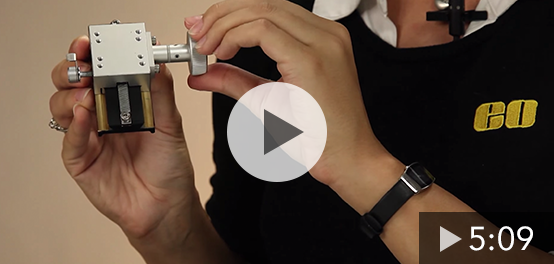
Important Concepts for Selecting Manual Translation Stages

Edmund Optics offers a variety of ball bearing, crossed roller bearing, dovetail, and rack and pinion translation stages for linear translation, rotary, and tip-tilt movement.

View Now Add to saved content

What are Ghost Images

Learn about ghost images in optical systems, which are faint second images caused by reflections within an optical component, from Kristina Kaszei.

View Now Add to saved content

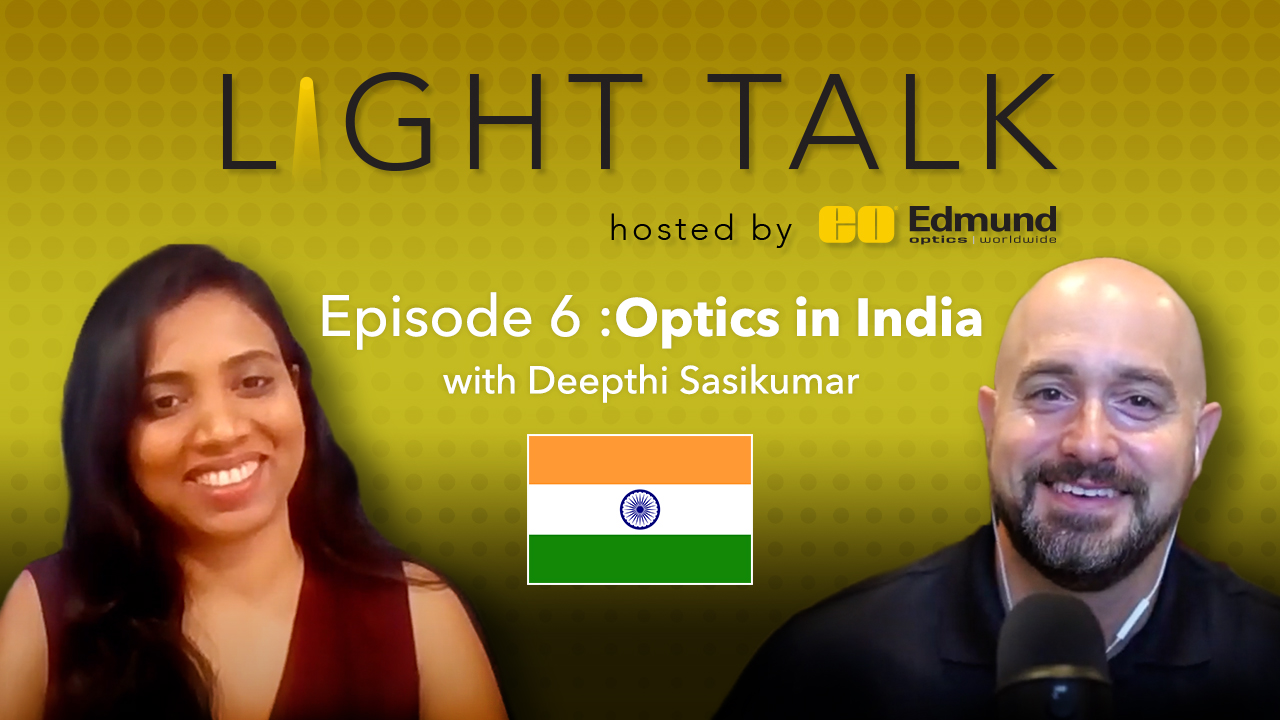
LIGHT TALK - EPISODE 6: Optics in India with Deepthi Sasikumar

Learn about the growth of the optics, lasers, and photonics market in India with Deepthi Sasikumar, Technical Engineering Manager at Edmund Optics.

View Now Add to saved content

CNC Glass Machining

Edmund Optics® utilizes a wide range of CNC machining equipment including ultrasonic machining and high speed cutting (HSC) technology from DMG MORI® for the machining of complex optical component geometries.

View Now Add to saved content

Choosing the Right Beam Expander with Dr. Mary Turner
Learn how to choose the right beam expander for your laser system in this tutorial from Dr. Mary Turner, Technical Fellow at Edmund Optics
View Now Add to saved content

Quick Tips for Cleaning Optics

Knowing how to properly clean your optical components is an easy way to maintain system performance and save money by decreasing the risk of component damage.

View Now Add to saved content

Comparison of SWIR and Visible Imaging Systems

SWIR, or short-wave infrared, is light invisible to the human eye but detectable by specialized infrared imaging lenses and cameras.

View Now Add to saved content

Single Point Diamond Turning: Edmund Optics Build-to-Print Manufacturing

Edmund Optics utilizes Diamond Turning to produce a wide range of high precision optical components.

View Now Add to saved content

UAV Series Fixed Focal Length Lenses from Edmund Optics®

These compact, high-resolution, infinite conjugate lenses are ideal for unmanned aerial vehicle (UAV) and other mobile robotics systems.

View Now Add to saved content

First Contact Polymer Solution

First Contact Polymer Solution is an easy-to-use liquid polymer for cleaning the surfaces of lenses and other optical components (see below for a more extensive list)

View Now Add to saved content

UAV Series Fixed Focal Length Lenses from Edmund Optics®

The UAV Series Lenses are compact, high-resolution, infinite conjugate lenses ideal for UAVs and other mobile robotics systems.

View Now Add to saved content

Powered by Edmund Optics: TM4 from EyeTech Digital Systems

The Future Depends on Optics®

View Now Add to saved content

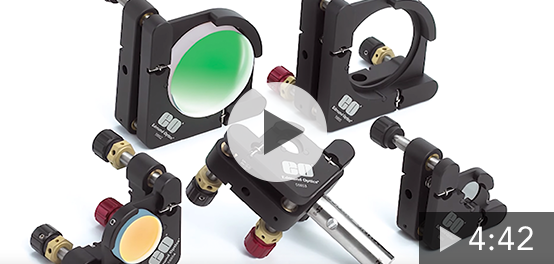
Important Concepts for Selecting Optical Component Mounts

Edmund Optics offers a variety of kinematic, bar-type, translating, ring, and modular mounting components.

View Now Add to saved content

How to Align a Laser System

Join Chris Williams as he briefly explains the basics of how to align a laser system onto a target.

View Now Add to saved content

Optical Filter Coatings: Comparison of Traditional and Hard-Sputtered

Confused about the differences between traditional-coated and hard-coated optical filters?

View Now Add to saved content

Polarization Overview - Part 2: Waveplates & Retarders (Advanced)

Waveplates and retarders are optical components designed to transmit light while modifying its polarization state without attenuating, deviating, or displacing the beam.

View Now Add to saved content

MercuryTL™ Liquid Lens Telecentric Lenses

The TECHSPEC® MercuryTL™ Liquid Lens Telecentric Lenses combine the parallax error correction and high image quality of a telecentric lens with the flexibility of an integrated liquid lens.

View Now Add to saved content

Selecting the Right Beamsplitter

Continuing from where Part I: X-Y Setup ends, learn how to add a Z-axis to an existing X-Y configuration to achieve three degrees of freedom.

View Now Add to saved content

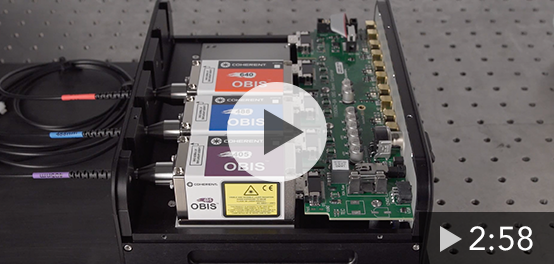
Beam Combining for Increased Power

When measuring minuscule particles, many advanced Life Science applications require more power than one laser produces.

View Now Add to saved content

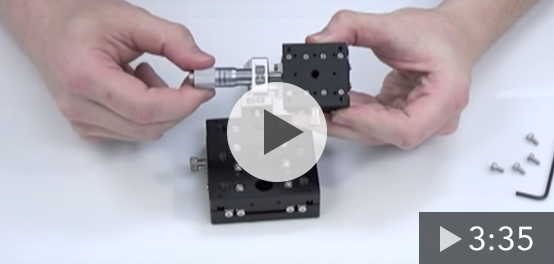
Multi-Axis Translation Stage Configurations: Part I: X-Y Setup

Learn how to make repeatable adjustments in more than one direction for any demanding optics, imaging, or photonics application with this simple, three minute video.

View Now Add to saved content

Fresnel Lens Review

Fresnel lenses are composed of a series of concentric grooves etched into one side of a sheet of plastic. Fresnel lenses are unlike typical spherical or aspherical optical lenses.

View Now Add to saved content

How to Determine Magnification of an Optical Lens Setup

When doing basic imaging, how do you determine the magnification an optical lens will provide?

View Now Add to saved content

Edmund Optics Global Manufacturing Facilities

Edmund Optics® (EO) manufactures millions of precision optical components and subassemblies every year in our 5 global manufacturing facilities.

View Now Add to saved content

How an Aspheric Lens is Made

Edmund Optics® manufactures thousands of precision aspheric lenses per month in our asphere manufacturing cell that operates 24 hours a day.

View Now Add to saved content

Polarization Overview - Part 1: Polarization Basics

Polarizers are optical components designed to filter, modify, or analyze the various polarization states of light.

View Now Add to saved content